

Undergraduate Thesis: Heartwood
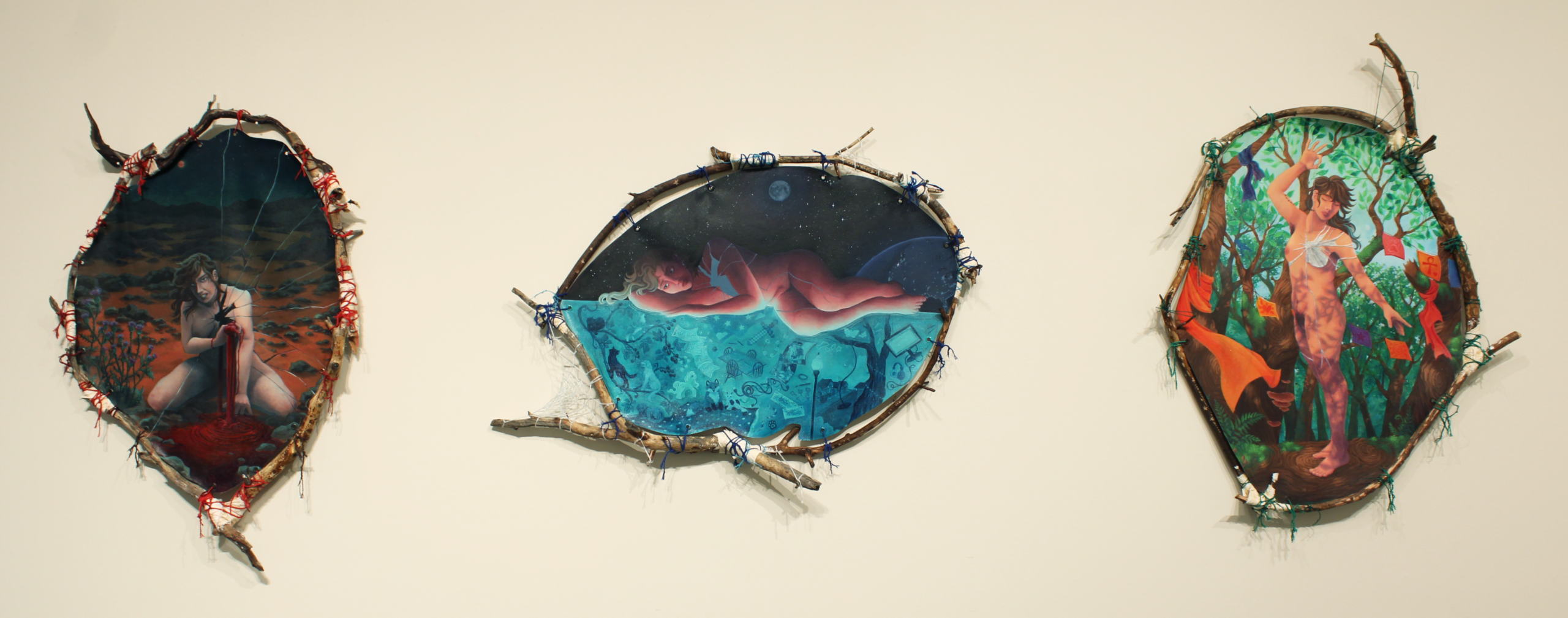
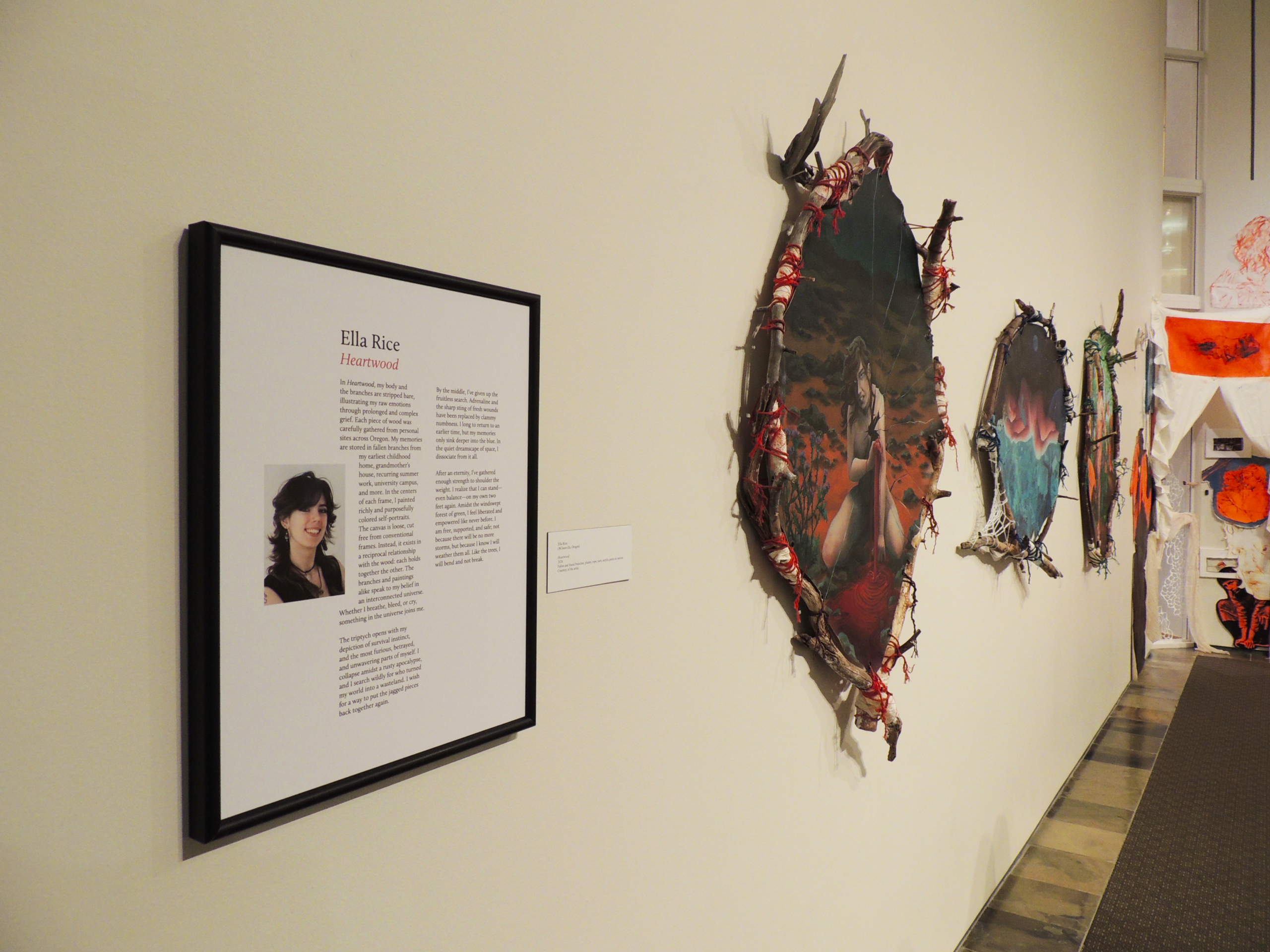
In Heartwood, my body and the branches are stripped bare, illustrating my raw emotions through prolonged and complex grief. Each piece of wood was carefully gathered from personal sites across Oregon. My memories are stored in fallen branches from my earliest childhood home, grandmother’s house, recurring summer work, university campus, and more. In the centers of each frame, I painted richly and purposefully colored self-portraits. The canvas is loose, cut free from conventional frames. Instead, it exists in a reciprocal relationship with the wood: each holds together the other. The branches and paintings alike speak to my belief in an interconnected universe. Whether I breathe, bleed, or cry, something in the universe joins me.
The triptych opens with my depiction of survival instinct, and the most furious, betrayed, and unwavering parts of myself. I collapse amidst a rusty apocalypse, and I search wildly for who turned my world into a wasteland. I wish for a way to put the jagged pieces back together again.


By the middle, I’ve given up the fruitless search. Adrenaline and the sharp sting of fresh wounds have been replaced by clammy numbness. I long to return to an earlier time, but my memories only sink deeper into the blue. In the quiet dreamscape of space, I dissociate from it all.


After an eternity, I’ve gathered enough strength to shoulder the weight. I realize that I can stand—even balance—on my own two feet again. Amidst the windswept forest of green, I feel liberated and empowered like never before. I am free, supported, and safe; not because there will be no more storms, but because I know I will weather them all. Like the trees, I will bend and not break.